Introduction
Many taxpayers expect their income tax refund to be credited soon after their return is processed, only to later discover that the refund has been adjusted against an outstanding demand. In several cases, the demand may relate to earlier assessment years, may already have been paid, or may even be incorrect. Such adjustments often come as a surprise and cause confusion among taxpayers.
Adjustment of refund against demand is legally permissible under the Income Tax Act. However, the law also provides safeguards to ensure that only valid and recoverable demands are adjusted. Understanding why such adjustments happen and what remedies are available is crucial to protect one’s legitimate refund.
What Does “Refund Adjusted Against Demand” Mean?
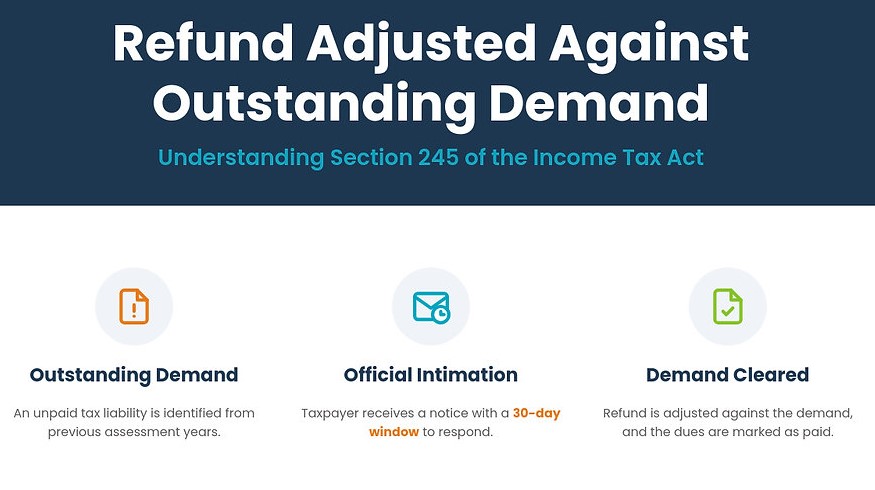
When a taxpayer has an outstanding tax demand for any previous assessment year, the Income Tax Department is empowered to set off the current year’s refund against such demand. Instead of releasing the refund, the department reduces or fully absorbs it to recover the alleged dues.
This adjustment is usually reflected in the intimation issued after processing of the return or in the refund status shown on the income tax portal.
Legal Basis for Adjustment of Refund
The power to adjust refunds against outstanding demand flows from the provisions of the Income Tax Act, which allow recovery of tax dues through set-off. However, such adjustment is not automatic or unconditional. The demand must be legally enforceable, correctly reflected in departmental records, and communicated to the taxpayer.
In principle, a refund should not be adjusted against a demand that is incorrect, already paid, stayed by appellate authorities, or pending rectification.
Common Reasons Why Refund Gets Adjusted
In practice, refunds are adjusted against demand for a variety of reasons. In many cases, the demand relates to old assessment years, sometimes going back several years. Frequently, such demands arise due to processing errors, TDS mismatches, or non-consideration of tax payments.
There are also instances where demands have already been paid by the taxpayer, but the payment was not properly mapped or reflected in the system. In some cases, demands survive despite the filing of appeals or rectification applications, leading to automatic adjustment of refunds.
How to Check the Details of Outstanding Demand
Before taking any action, it is essential to verify the demand that has been adjusted. Taxpayers should log into the income tax portal and check the outstanding demand section, where assessment year-wise demand details are displayed.
The demand entry usually specifies the assessment year, section under which demand was raised, and the outstanding amount. Careful verification with past orders, challans, and appeal records is necessary to determine whether the demand is correct.
What If the Demand Is Correct?
If, after verification, it is found that the demand is valid and unpaid, the adjustment of refund is legally justified. In such cases, no further action is required except ensuring that the demand is fully settled and properly reflected as paid in the records.
However, even where the demand is correct, taxpayers should retain proof of adjustment and updated demand status for future reference.
What If the Demand Is Incorrect or Already Paid?
Where the demand is incorrect, already discharged, or disputed, the taxpayer has the right to contest it. The first step is to submit a response to the outstanding demand on the income tax portal, clearly indicating whether the demand is agreed or disagreed with.
If the demand has been paid earlier, payment details such as challan numbers and dates should be furnished. Where the demand is wrong due to processing errors, a rectification application may be required to correct the underlying mistake.
In cases where the demand is under appeal or stayed, relevant appellate orders or stay details should be referred to while responding.
Role of Rectification in Refund Adjustment Cases
Rectification plays a crucial role where refunds are adjusted due to incorrect demands arising from apparent mistakes. Filing a properly drafted rectification request, supported by documentary evidence, often leads to deletion of the demand and release of the adjusted refund.
It is important to note that rectification should be filed for the relevant assessment year in which the demand arose, not for the year in which the refund was adjusted.
When to File a Grievance
If the refund continues to remain adjusted despite responding to demand and filing rectification, filing a grievance becomes appropriate. A grievance brings administrative attention to the issue and often results in expedited review of stuck refund adjustments.
However, grievances are effective only when prior remedies have been correctly exhausted and documented.
Practical Issues Faced by Taxpayers
In many real-life cases, refunds are adjusted mechanically without prior intimation or despite pending rectifications. Taxpayers also face situations where only part of the refund is adjusted, and the balance remains unissued without explanation.
Such situations require careful tracking and timely follow-up, as unresolved adjustments can carry forward errors into subsequent years.
Conclusion
Adjustment of income tax refund against outstanding demand is a legally recognised recovery mechanism, but it is not absolute. Taxpayers are entitled to ensure that only lawful, correct, and recoverable demands are enforced. Automatic adjustment of refunds against incorrect or settled demands undermines taxpayer rights and often results from system-level mismatches rather than deliberate non-compliance.
From a practical standpoint, taxpayers must actively verify demand details, respond appropriately on the portal, and pursue rectification or grievance remedies where required. Passive acceptance of refund adjustment may lead to permanent loss of legitimate refunds.
In conclusion, refund adjustment cases demand a structured and informed response. Timely verification, correct procedural action, and professional guidance can ensure that genuine refunds are restored while avoiding prolonged correspondence or litigation with the tax authorities.

